
Supply Chain
Supply Chain
Every Ferrino product is born from a global supply chain made up of people, skills and shared responsibilities.
We collaborate with selected suppliers to ensure quality, safety, and compliance with environmental and social standards throughout the production process.
Mapping & Traceability
Understanding our supply chain is essential to improving it. This is why we have initiated a process of progressive supplier mapping, starting with direct partners (Tier 1) and gradually expanding the analysis to the subsequent levels of the supply chain.
This work allows us to better understand the origin of materials, production processes and potential environmental and social risks.
Ferrino has begun mapping its supply chain, starting with Tier 1 suppliers, with the goal of gradually extending the analysis to subsequent levels. In the medium term, we aim to increase visibility into Tier 2 suppliers, while in the long term, we will work to improve our understanding of the upstream stages of the supply chain (Tiers 3 and 4).
This phased approach allows us to improve the quality of available information and intervene effectively where the impact is greatest.
To clarify the complexity of the supply chain, the supply chain is divided into levels, called Tiers, which indicate the distance of the supplier from the final product.
Tier 1 - Direct Suppliers
They are the partners who directly manufacture the finished Ferrino products or the main assembly phases.
We have a direct and ongoing relationship with these suppliers, and they are the first level on which our mapping, monitoring, and collaboration work focuses.
Tier 2 - Material Suppliers
This tier includes suppliers who produce fabrics, padding, accessories and technical components used by Tier 1 partners.
Their activity has a significant impact both in environmental terms (use of energy, water, chemicals) and social terms.
Tier 3 - Raw materials
Tier 3 includes companies that supply the basic raw materials, such as natural or synthetic fibers, polymers, metals, and other materials that make up the product.
This phase is often the most complex to track, but it is fundamental to understanding the overall impact of the materials used.
Tier 4 - Extraction
This level refers to the initial extraction or production of natural resources, such as oil, minerals, or agricultural crops.
It is the point furthest from the final product and the one that presents the greatest challenges in terms of traceability and data collection.
The selection is based on:
- Site inspections at the factories by our staff
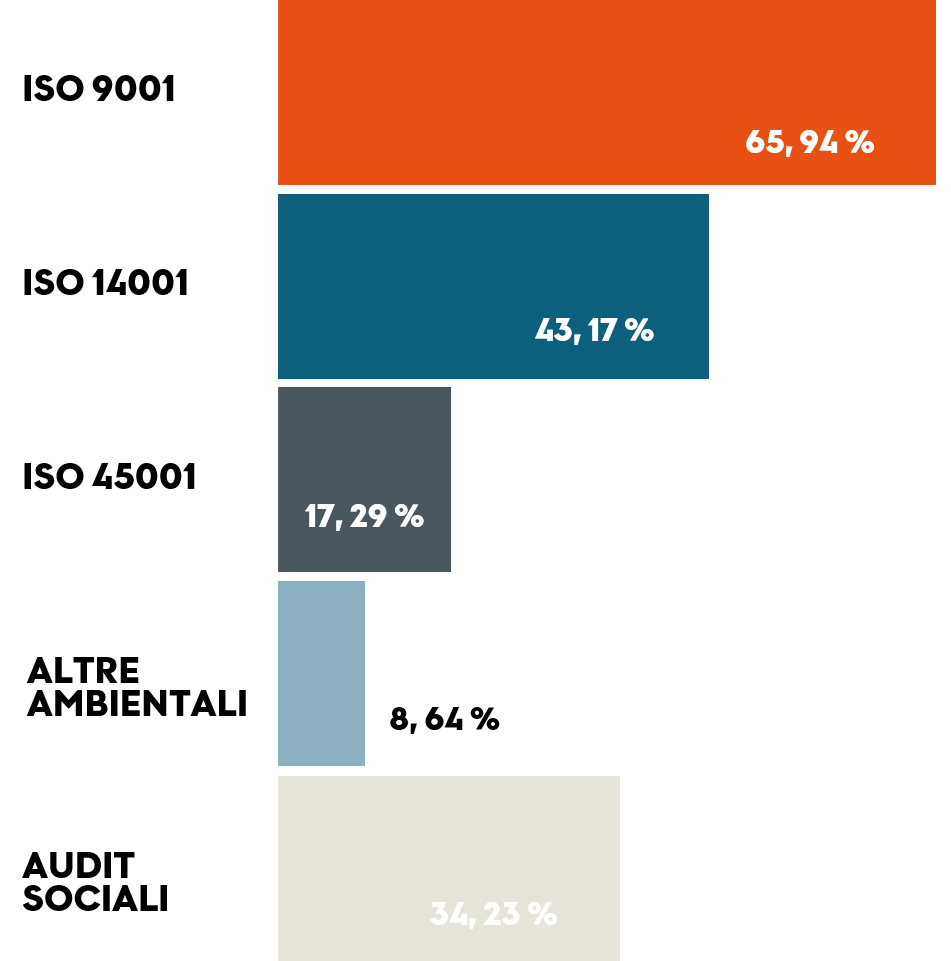
- Verification of specific certifications
- A regularly updated evaluation and ranking system through performance indicators.
- The Safety Plan, which establishes material safety requirements and compliance with REACH regulations
- The Supplier Code of Conduct, which summarises the ethical, social and environmental principles shared with Ferrino
- Our Ferrino Social Audit, a self-assessment questionnaire on social and environmental protection, created following industry best practices.
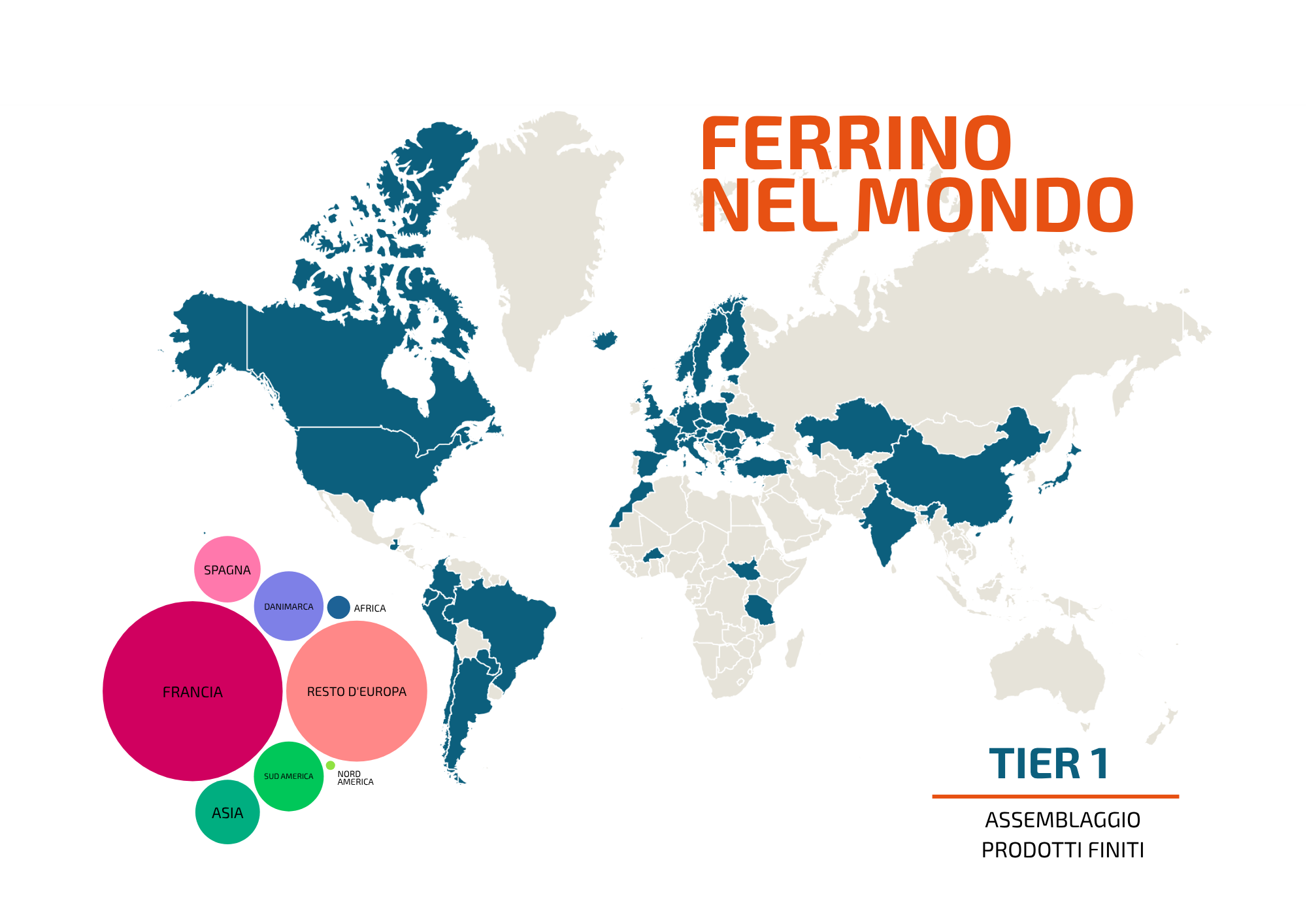
We pay particular attention to the selection of non-EU suppliers, which today represent 82.60% of Tier 1 , with a presence concentrated above all in the Far East.
Of a total of 31 non-EU Tier 1 suppliers, 65% hold at least one international certification or social audit. When looking at purchasing volume, this percentage rises to 83.84% , confirming our commitment to collaborating with partners who adopt high environmental and social standards, recognized by third-party bodies.
In some non-EU countries, there is a risk of human rights violations. Despite regular monitoring, we estimate a residual risk of 25%. We require our suppliers to sign a Code of Conduct that sets precise standards in line with the ILO Constitution, promoting the prevention of potential violations throughout the supply chain.
This control system has tangible positive effects: it strengthens ethical standards and fosters stronger supplier relationships. However, in contexts with low regulatory transparency, we estimate a higher risk (approximately 50%) of inadequate working conditions. Differences in local regulations require constant monitoring.
We work with strategic suppliers, often long-standing partners, in countries such as Italy, China, Vietnam, Myanmar, and Bangladesh. In every context, we promote respect, responsibility, and decent working conditions.
EIS Pilot Project
In 2024, Ferrino joined the Employment Injury Scheme (EIS) Pilot , the first social insurance program for workplace injuries aimed at ready-made garment (RMG) workers in Bangladesh. This initiative, promoted by international institutions and over 65 global brands, supports the creation of a stable social protection system, expected to become national by 2027.
In this way, Ferrino, while not fully included in the project's specific production categories, helps guarantee monthly pensions to injured workers and the families of deceased workers. To date, the EIS Pilot provides coverage to approximately 4 million people, concretely improving workers' living conditions and strengthening social protections in the country.
Participation in the project represents a further step forward in Ferrino's commitment to a responsible supply chain and the protection of human rights.
By joining the EIS Pilot, Ferrino confirms its commitment to supporting more equitable and inclusive development models, promoting safety, respect, and dignity at work along the entire value chain.