
Product
Product
Products designed to last. Responsibly.
Quality & Durability
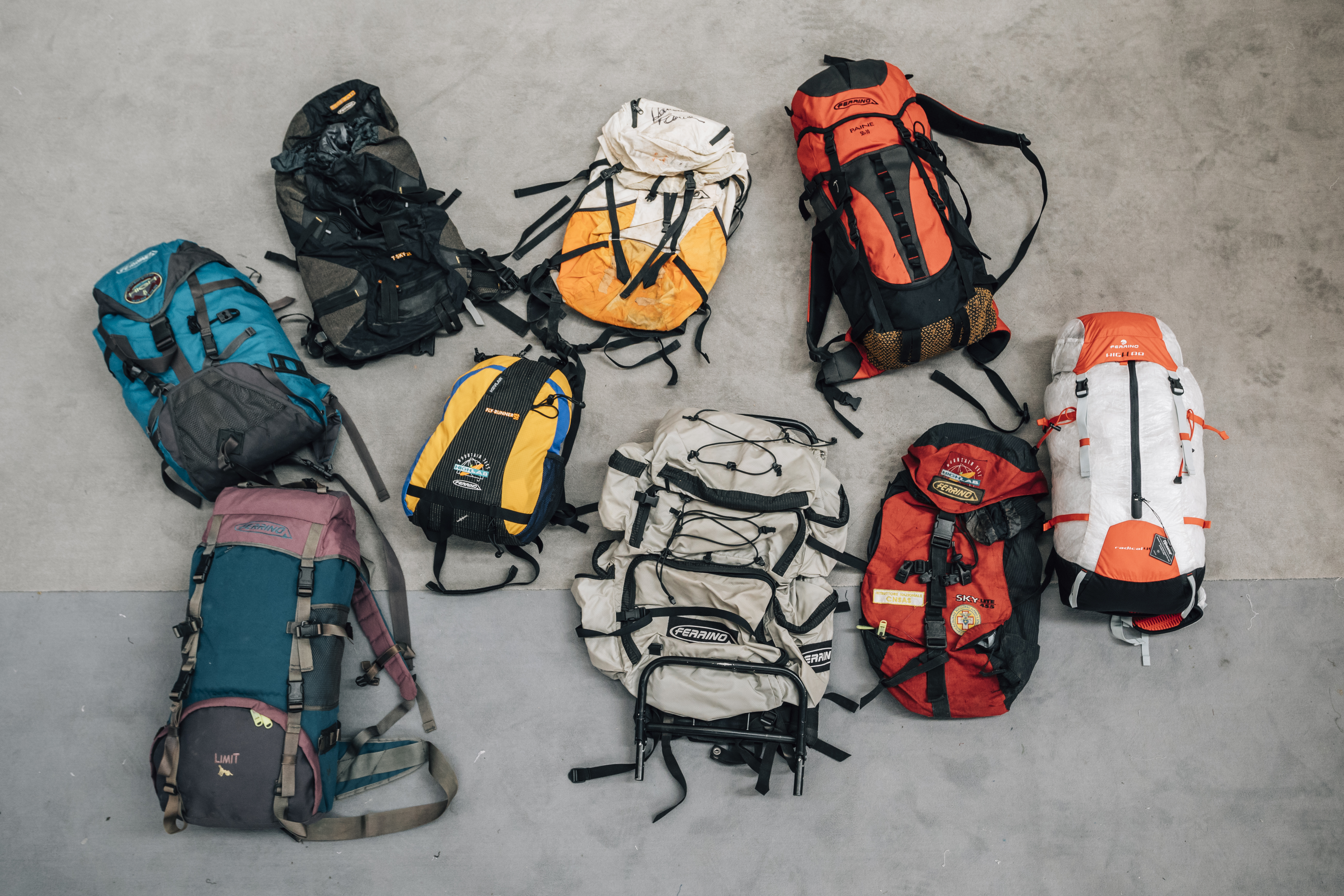
A truly sustainable product is one that lasts through many adventures, not just one season. For Ferrino, sustainability begins with the project: functional design, durable materials, rigorous testing, and a customer service that extends the life of our products over time.
Every Ferrino product is created to meet real outdoor needs, without compromising on quality.
During the design phase, we evaluate functionality, construction, and components to reduce unnecessary complexity, improve repairability, and ensure reliable performance over time. Good design reduces waste, extends the product's lifecycle, and limits the consumption of new resources.
Durability is one of the most important aspects of a product's sustainability. This is why Ferrino subjects each item to thorough testing, both in the lab and in the field, to ensure resistance, safety, and reliability in real-world conditions.
A product that lasts over time reduces the need for replacement and helps limit the overall environmental impact.
Every Ferrino product is created to meet real outdoor needs, without compromising on quality.
During the design phase, we evaluate functionality, construction, and components to reduce unnecessary complexity, improve repairability, and ensure reliable performance over time. Good design reduces waste, extends the product's lifecycle, and limits the consumption of new resources.
Durability is one of the most important aspects of a product's sustainability. This is why Ferrino subjects each item to thorough testing, both in the lab and in the field, to ensure resistance, safety, and reliability in real-world conditions.
A product that lasts over time reduces the need for replacement and helps limit the overall environmental impact.

Field tests
A fundamental part of quality control is field testing, which complements technical checks.
Products are tested at various stages throughout their life cycle by mountain guides and outdoor professionals, who, thanks to their experience, provide essential feedback for continuous improvement.
This is accompanied by the initiative of the Ferrino HighLab Camps , real open-air laboratories located between 1700 and 3585 metres above sea level (in Piedmont, Valle d'Aosta, Friuli-Venezia Giulia and Turkey).
Here, anyone can try Ferrino products for free and contribute, through their feedback , to the evolution of the range, strengthening the company's goal: to design equipment that guarantees comfort and safety to all users, both professionals and amateurs.
Products are tested at various stages throughout their life cycle by mountain guides and outdoor professionals, who, thanks to their experience, provide essential feedback for continuous improvement.
This is accompanied by the initiative of the Ferrino HighLab Camps , real open-air laboratories located between 1700 and 3585 metres above sea level (in Piedmont, Valle d'Aosta, Friuli-Venezia Giulia and Turkey).
Here, anyone can try Ferrino products for free and contribute, through their feedback , to the evolution of the range, strengthening the company's goal: to design equipment that guarantees comfort and safety to all users, both professionals and amateurs.
Materials
Material selection is a key step in our product development. Each fiber is chosen to meet specific technical requirements, but also taking into account its availability, traceability, lifecycle impact, and the potential for recovery and recycling at end-of-use.
We recognize that every material choice has environmental, social, and functional consequences: this is why we are committed to careful and transparent selection, evaluating circular or certified solutions where possible, which improve product sustainability without compromising performance.
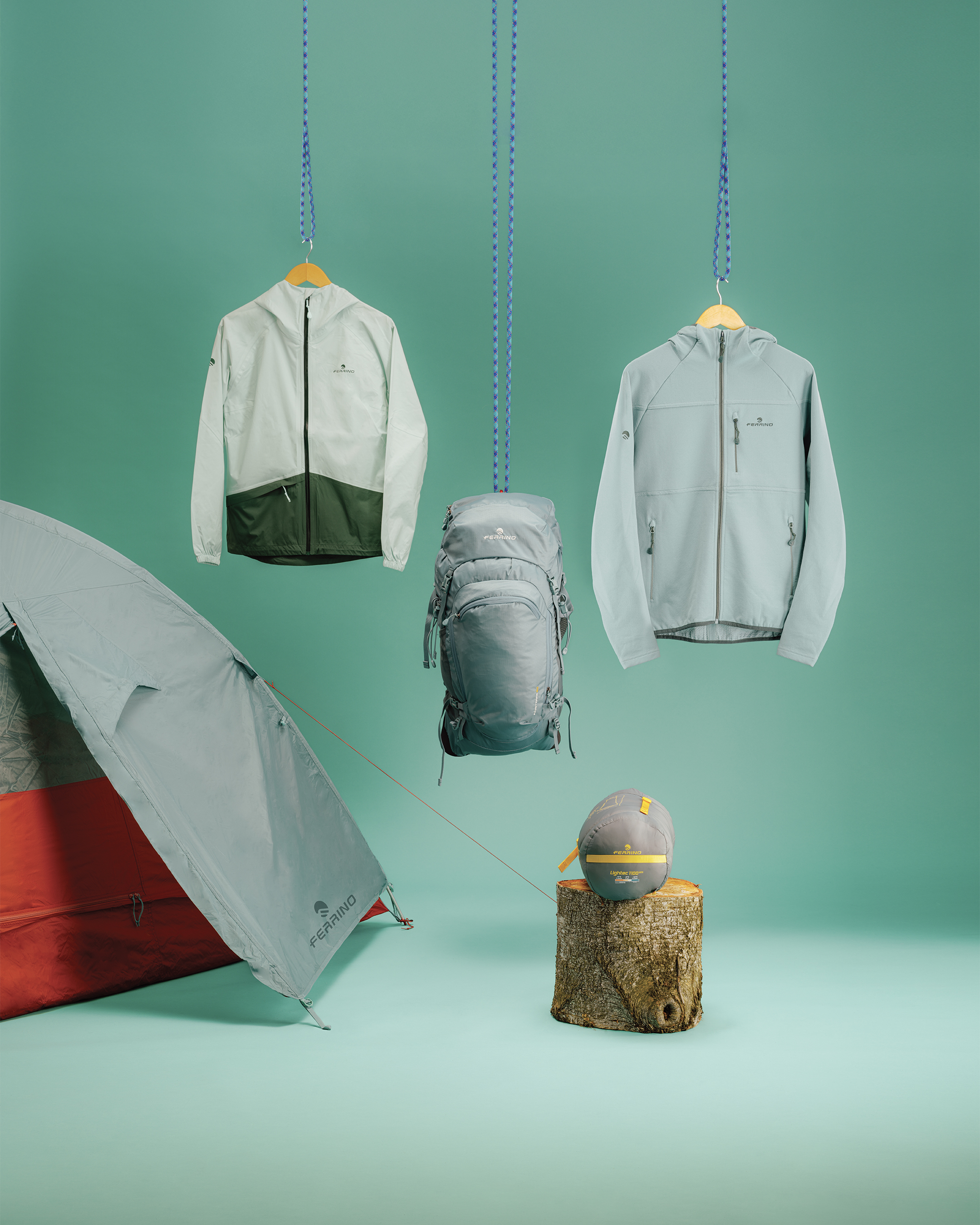
Here we share the choices we've made so far: recycled raw materials, certified supply chains, and materials we research daily.
POLYESTER
Polyester is a strong, lightweight, and versatile synthetic fiber, widely used in technical and outdoor equipment and clothing.
Derived from petroleum, it has a significant environmental impact, both in production and at the end of its life. This is precisely why we are increasingly focusing on recycled alternatives.
RECYCLED POLYESTER
Recycled polyester is a more sustainable choice than virgin polyester: it requires 45% fewer fossil fuels and generates 26% fewer greenhouse gas emissions.
Obtained mainly from post-consumer plastic bottles or industrial waste, reducing the consumption of virgin resources and promoting a more circular economy.
NYLON
Nylon is a strong, elastic, and abrasion-resistant synthetic fiber, ideal for technical products such as backpacks, clothing, and outdoor accessories.
RECYCLED NYLON
Recycled nylon was created to reduce the use of virgin plastics: coming in part from disused fishing nets or textile waste, it consumes 34% less fossil fuels and could potentially produce up to 89% fewer emissions than traditional nylon.
Since it's still not widely available on the market, it's harder to find, but it represents a concrete opportunity to build a more resilient, circular supply chain.
Polyester is a strong, lightweight, and versatile synthetic fiber, widely used in technical and outdoor equipment and clothing.
Derived from petroleum, it has a significant environmental impact, both in production and at the end of its life. This is precisely why we are increasingly focusing on recycled alternatives.
RECYCLED POLYESTER
Recycled polyester is a more sustainable choice than virgin polyester: it requires 45% fewer fossil fuels and generates 26% fewer greenhouse gas emissions.
Obtained mainly from post-consumer plastic bottles or industrial waste, reducing the consumption of virgin resources and promoting a more circular economy.
NYLON
Nylon is a strong, elastic, and abrasion-resistant synthetic fiber, ideal for technical products such as backpacks, clothing, and outdoor accessories.
RECYCLED NYLON
Recycled nylon was created to reduce the use of virgin plastics: coming in part from disused fishing nets or textile waste, it consumes 34% less fossil fuels and could potentially produce up to 89% fewer emissions than traditional nylon.
Since it's still not widely available on the market, it's harder to find, but it represents a concrete opportunity to build a more resilient, circular supply chain.
ORGANIC COTTON
Organic cotton grows without pesticides, chemical fertilizers, or GMOs, respecting natural soil cycles and promoting biodiversity. It's a more ethical and sustainable alternative to conventional cotton.
CERTIFIED FEATHER
Down is a natural, lightweight, and high-performance insulating material used in our sleeping bags to ensure maximum thermal comfort with minimal bulk.
We use only RDS-certified down, which guarantees respect for animal welfare throughout the entire supply chain, from harvesting to the finished product. A conscious choice for high quality without sacrificing ethics.
STEEL
Steel is the ideal material for building load-bearing structures such as professional tent poles, particularly for projects for organizations and NGOs in emergency or long-term settings.
Its robustness guarantees stability even in extreme conditions, helping to extend the useful life of products and reduce the environmental impact over time.
ALUMINUM
Aluminum is a lightweight and durable material, widely used for poles, technical accessories, and high-performance components. This allows us to reduce the weight of our products without compromising their strength.
It is also highly recyclable, making it a strategic choice for more sustainable design.
Organic cotton grows without pesticides, chemical fertilizers, or GMOs, respecting natural soil cycles and promoting biodiversity. It's a more ethical and sustainable alternative to conventional cotton.
CERTIFIED FEATHER
Down is a natural, lightweight, and high-performance insulating material used in our sleeping bags to ensure maximum thermal comfort with minimal bulk.
We use only RDS-certified down, which guarantees respect for animal welfare throughout the entire supply chain, from harvesting to the finished product. A conscious choice for high quality without sacrificing ethics.
STEEL
Steel is the ideal material for building load-bearing structures such as professional tent poles, particularly for projects for organizations and NGOs in emergency or long-term settings.
Its robustness guarantees stability even in extreme conditions, helping to extend the useful life of products and reduce the environmental impact over time.
ALUMINUM
Aluminum is a lightweight and durable material, widely used for poles, technical accessories, and high-performance components. This allows us to reduce the weight of our products without compromising their strength.
It is also highly recyclable, making it a strategic choice for more sustainable design.