
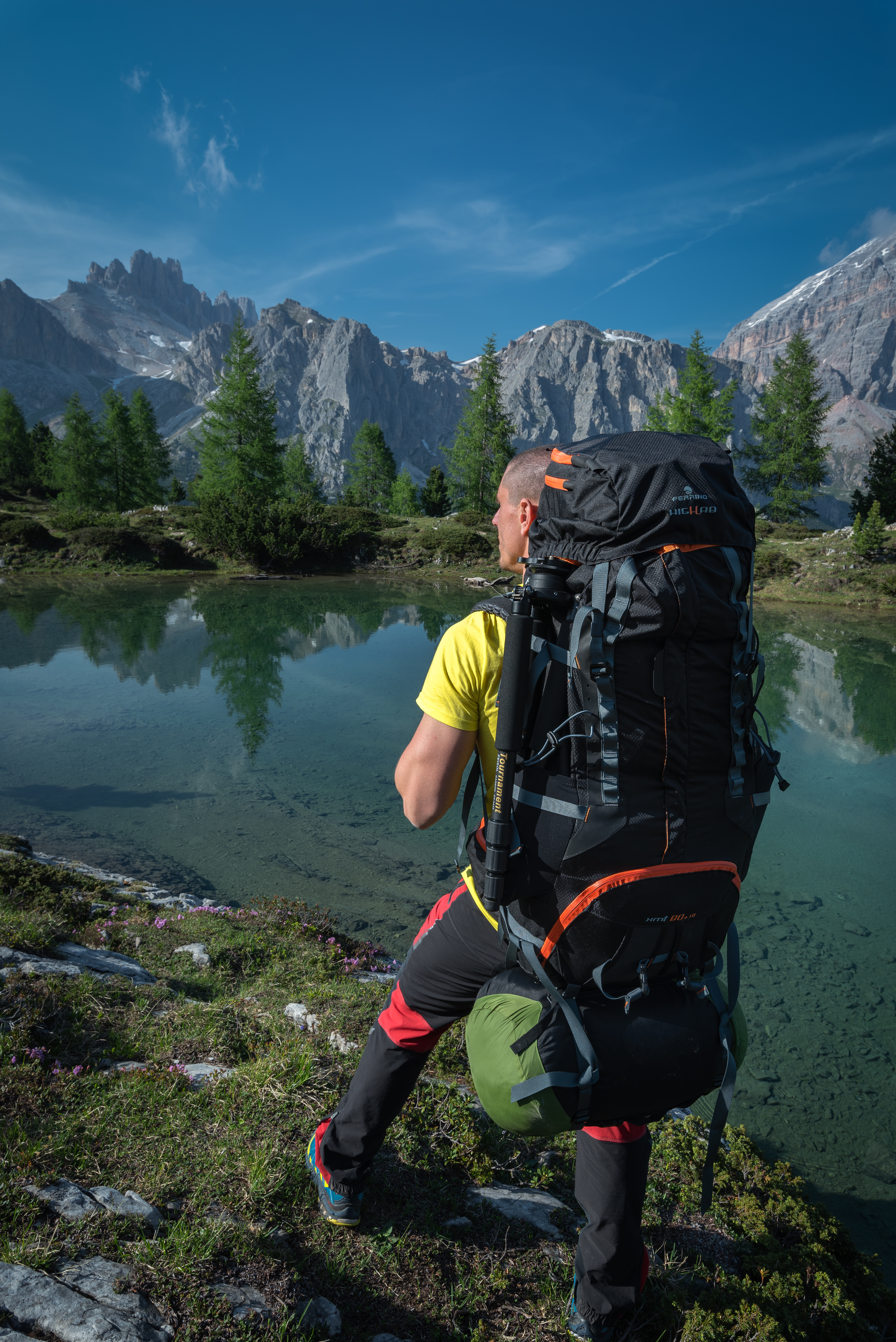
Do you love the outdoors and photography? Spending the night in a tent photographing the stars, even in extreme conditions?
Here are some tips on outdoor photography from professional photographer Giulio Cobianchi.
A landscape photographer often finds himself in extreme situations, especially if, like me, he loves wild nature, mountains and Nordic landscapes.
I like to spend nights on top of mountains or among fjords and photograph the Milky Way and the Northern Lights. I like to enjoy nature, observing it in silence, while waiting for the right moment to capture the long-planned photo.
I love that feeling of freedom in my lungs, as I climb the mountains to get to the shooting point. The effort of getting up there, the long journey, the weight of the equipment and the shortness of breath, are nothing compared to the immensity that looms before me every time.
It is not always possible to capture the planned shot. Many things must coincide: to photograph the Milky Way, there must be a New Moon and the sky must be clear, from which it is clear that the possibilities are limited to about 10 days a month and in these 10 days there must be no clouds, here the probabilities decrease even more.
Here in the north of Norway, where I live, I like to hunt for the Northern Lights and here things get even more complicated as far as plans are concerned. In this case there must be activity, then the solar wind must be negative, that is, it must move from north to south to be visible in the northern hemisphere and last but not least, the sky must be clear and at these latitudes it is often overcast.
The secret to the perfect shot is a passion for uncontaminated nature, mental and physical preparation and having everything you need to not give up on the most important moment of the shot, that long-awaited and long-planned moment.
Spending a night at high altitudes with temperatures that can drop to -15 or lower is not easy; gusts of wind and freezing temperatures often create very difficult conditions for shooting, especially if you don't have everything you need to deal with the situation.
In my experience, I have learned that the hard part is managing to carry everything, from photographic equipment to heavy clothing to be able to spend the night without getting hypothermia, always standing in front of the tripod.
Personally, I always start with lighter clothing, with a light thermal layer underneath, a slightly padded midlayer and a completely windproof and water-repellent outer layer. Once I get to the top I change completely, wearing a thicker merino wool base layer, a fleece, a goose down jacket and finally one or two windproof layers.
Same thing for the part below:
This change of clothes is essential to be able to resist the cold until sunrise the next day.
The hardest part is trying to pack everything into the backpack and outside without taking up too much space. I usually leave out the clothes I need to wear when I leave and put in all the clothes I need to survive up there.
I put the sleeping bag inside the backpack and the tent tied to the outside. Tied outside on one side, there will also be the tripod, while the rest of the photographic equipment I always put inside and protected in turn by another case. One fundamental thing is food and water: you need a lot of calories to resist the cold and to face the effort, so I equip myself with energy bars, supplements and dry food (so as to have a lot of calories and little bulk), a thermal water bottle with hot tea or coffee and water. I always have two torches with me and spare batteries in case they run out during the night.